

Skip to content
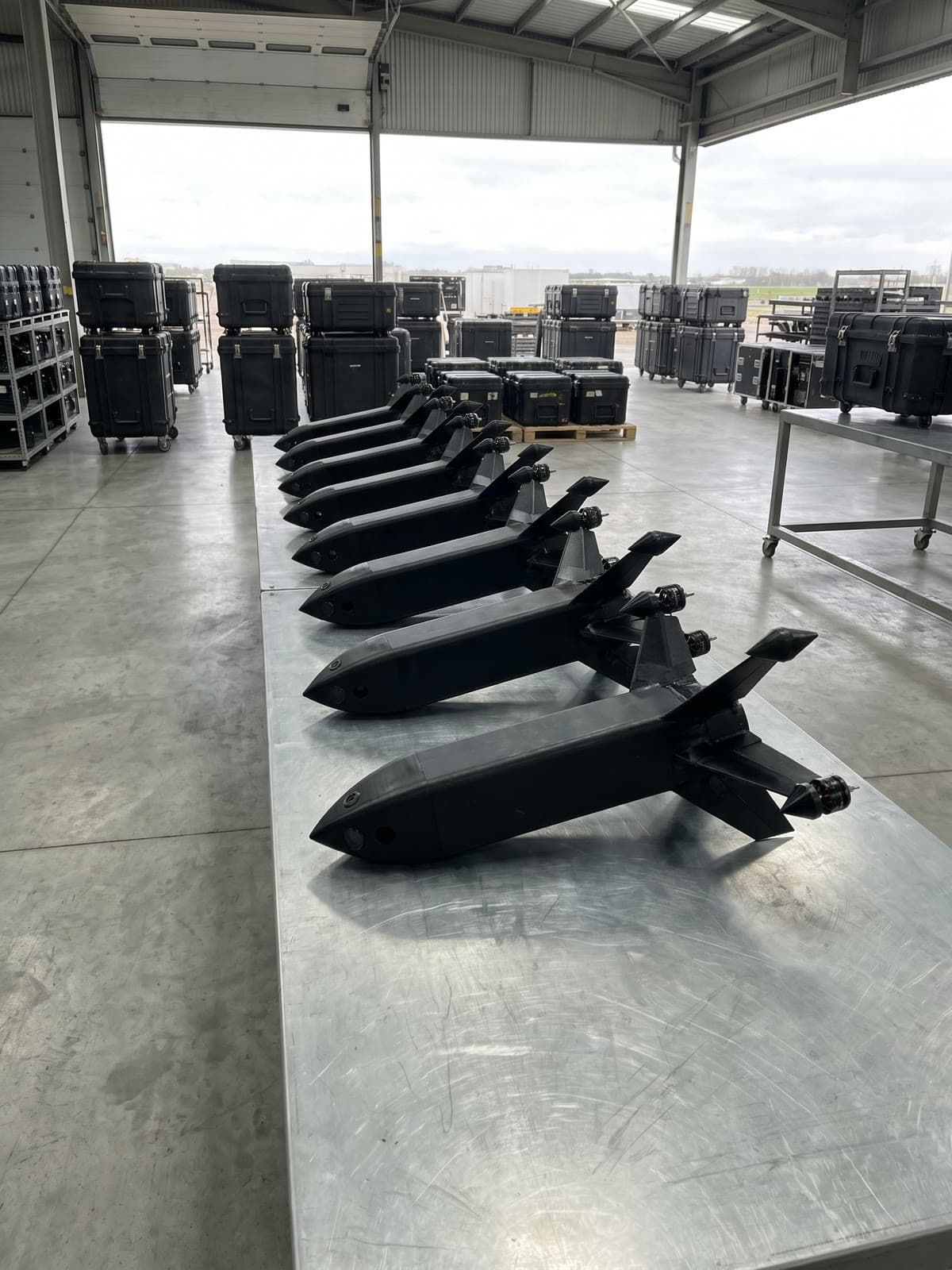
A row of black interceptor drones on a galvanised steel bench in a hangar

Automated counter-UAS system

Falcon

Classes of target engaged
Command integration
System architecture

What it engages

  • Commercial drones

    Off-the-shelf civilian airframes, bought without restriction and used to watch a site from a distance at which the operator cannot be seen.

  • FPV airframes

    Small, fast and cheap. Flown by hand, so they do not follow a track anyone can predict from the first seconds of detection.

  • Loitering munitions

    Long range, Shahed type among them. They arrive on a bearing and at an altitude chosen by the attacker, not by the defender.

Detect, track, neutralise

Falcon is a counter-UAS system built to detect, track and neutralise unmanned aircraft: from commercial airframes through FPV to long-range loitering munitions. The architecture is fully automated and integrates with existing command systems.

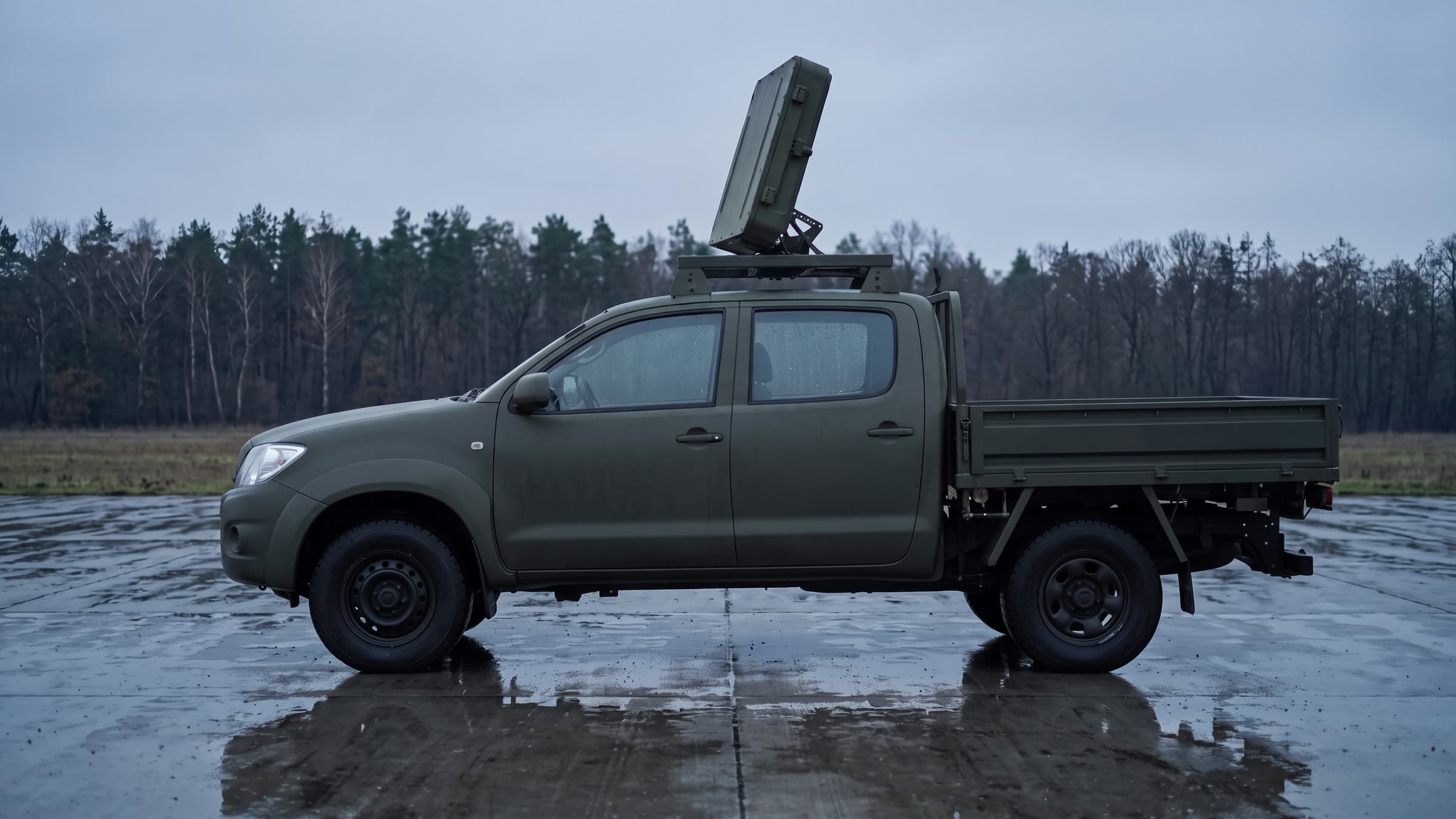
Pickup carrying a flat radar panel on its roof, forest road in fog

Detection

First link in the chain

The system watches three classes of target at once: commercial airframes, FPV and long-range loitering munitions. Detection is the beginning of the chain, not the end of it.

Target classes
Commercial, FPV, loitering munitions
Loitering munitions
Shahed type
Range and bands
not published
Pickup carrying a mast-mounted radar raised above the cab, wet apron and forest behind

Tracking

Automated, not hand-flown

The system architecture is fully automated and plugs into the command posts the customer already operates. It does not replace them with a console of its own.

Architecture
Fully automated
Integration
Existing C2 systems
Reaction time
not published
A single unmanned aircraft descending toward a tank in a field, overcast sky

Neutralisation

Last link

Neutralisation closes the chain. The means is matched to the task and is not published - what we show is the sequence, not the effector.

Effector
not published
Protected assets
Critical infrastructure, bases, strategic sites
Effectiveness
not published