Skip to content
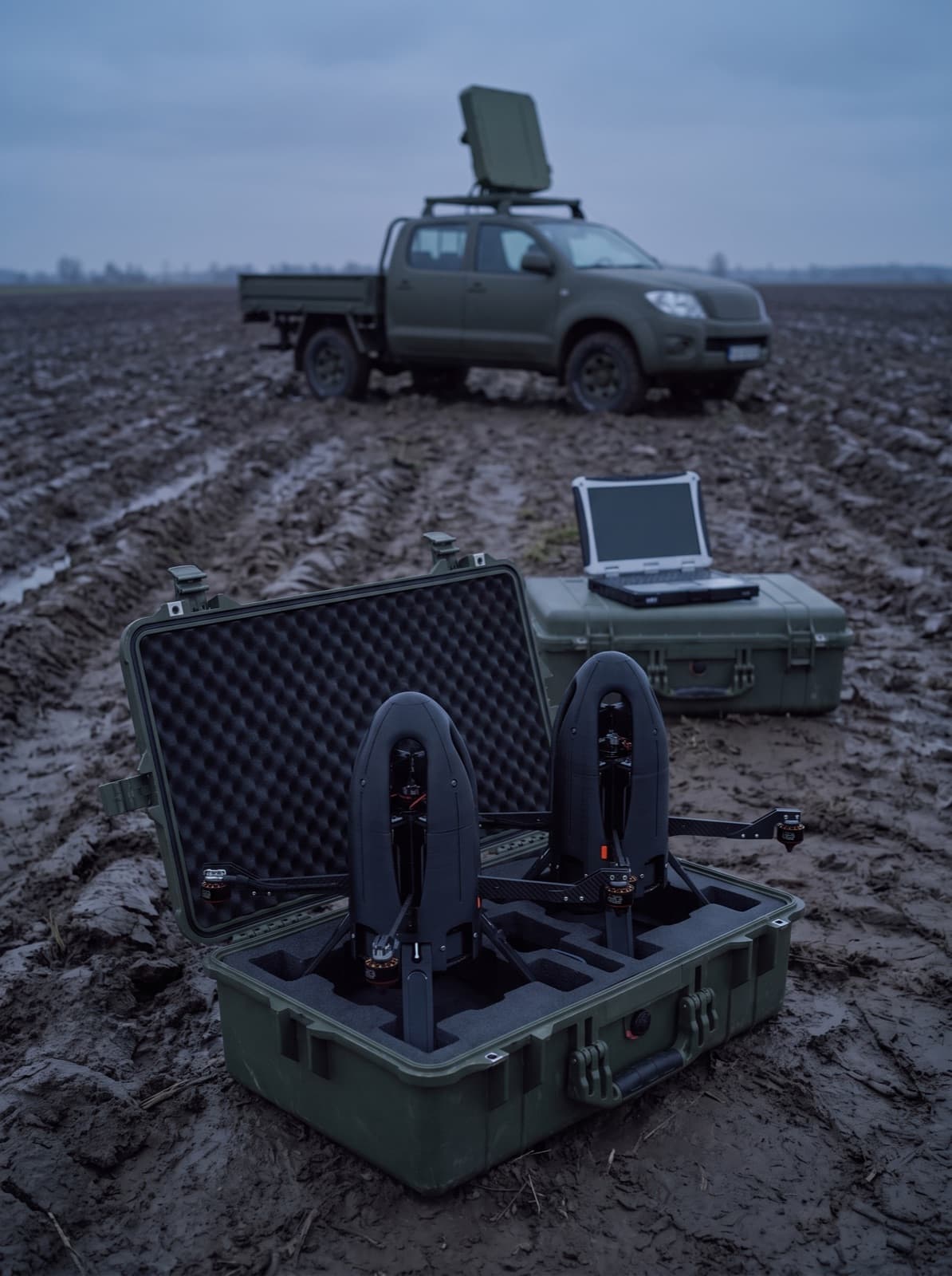
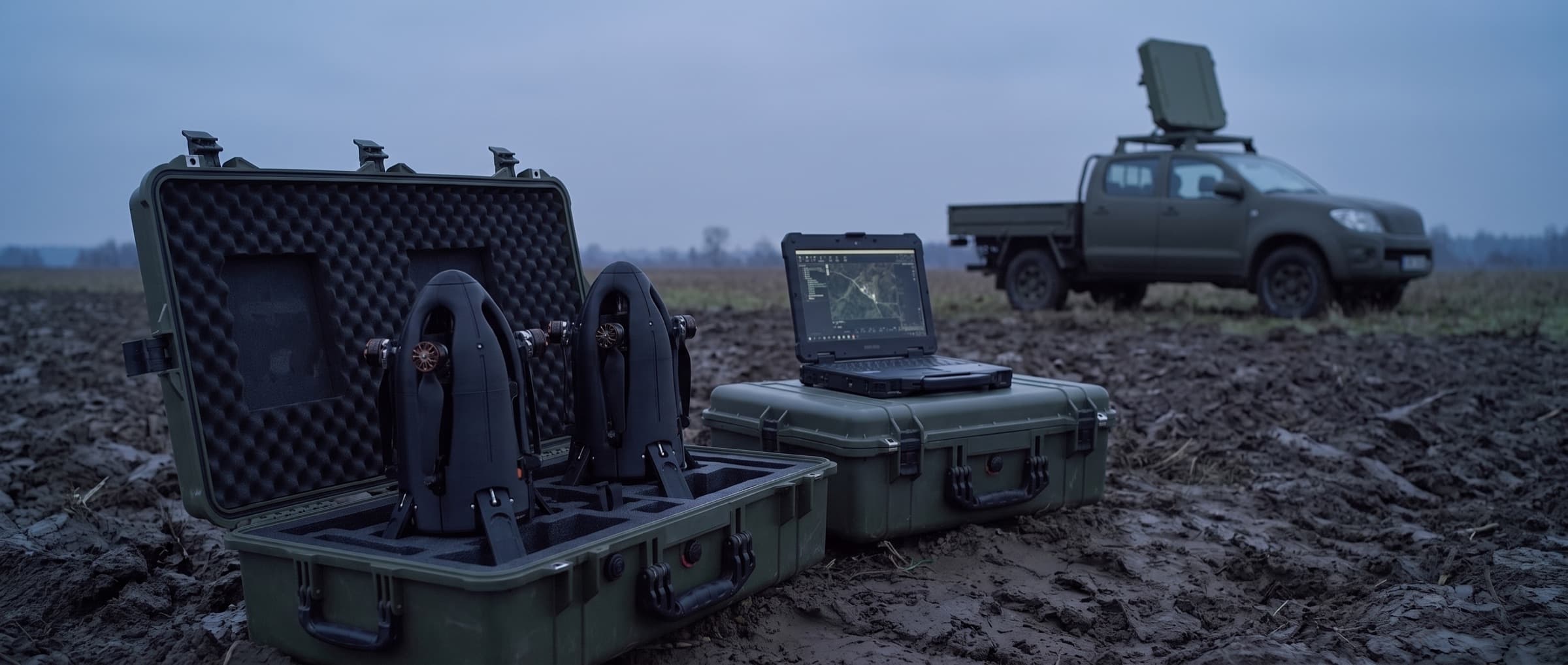
Open transport case with an interceptor, a control station and a radar pickup in a field at dusk

Combat drone system

Avalon

Maximum endurance
Maximum range
Lifts per vehicle
Technology readiness level

What the system gives the operator

  • Swarm formations

    The platform handles single aircraft and whole swarms. The same crew runs one machine and a group, because the mode is chosen in the system rather than by building a second team.

    Flight modes
    automatic, semi-manual, manual
    Scale
    single and in a swarm
  • Onboard sensors

    A high-resolution camera and a thermal camera on one aircraft, so the clock does not split the task into two configurations.

    Imaging
    electro-optical and infrared
    Coverage
    day and night without refitting
  • Navigation with a reserve

    The GPS modules are duplicated. Losing one does not end the task, which in swarm work decides whether you lose one aircraft or the formation.

    GPS
    two high-precision modules
    Ingress protection
    IP54
  • Modular payload

    The same aircraft takes different loads: a warhead, aerial munitions or a rescue package. Release is automatic or on the operator's command.

    Lift
    up to 3600 g
    Release
    automatic or manual

Aircraft, launcher, lift

Avalon is a combat drone system made of three parts: a vertical take-off aircraft with folding arms, a modifiable launch platform on a pick-up vehicle carrying twelve telescopic lifts, and the lift itself, which also works as a fixed position. The aircraft operate singly and in swarm formations, in manual or automatic mode. The system is at TRL 7: the hardware has been tested in real conditions, including underground.

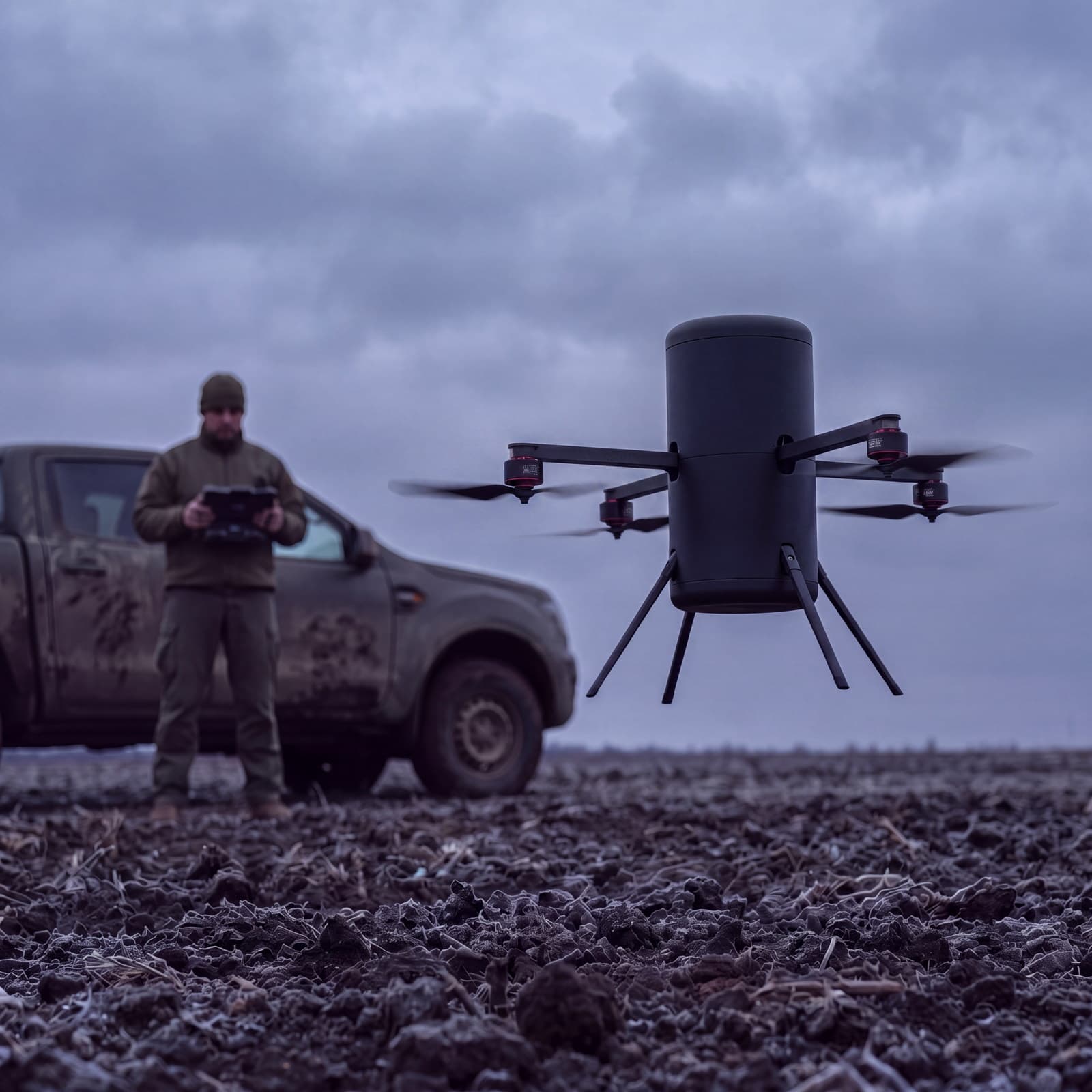
An Avalon aircraft hovering over a field, arms deployed and observation gimbal under the fuselage

Aircraft

Vertical take-off, folding arms

The vertical layout allows the aircraft to be kept in a tube and released without being unfolded on the ground: the arms swing out only at launch. Forty minutes and 30 km are figures without payload - with one kilogram of cargo the range falls to 23.5 km, with two to 19.5 km, with three to 14.3 km. The ceiling reaches 3500 m, and the aircraft works in rain and snow, in gusts up to 20 m/s and from -20 to +50 °C.

Dry mass
3900 g
Take-off mass
7500 g
Lift
up to 3600 g
Endurance and range
40 min, 30 km
Speed
22 m/s max., 18 m/s cruise
Dimensions
160 × 550 mm folded, 830 × 550 mm deployed
Ingress protection
IP54
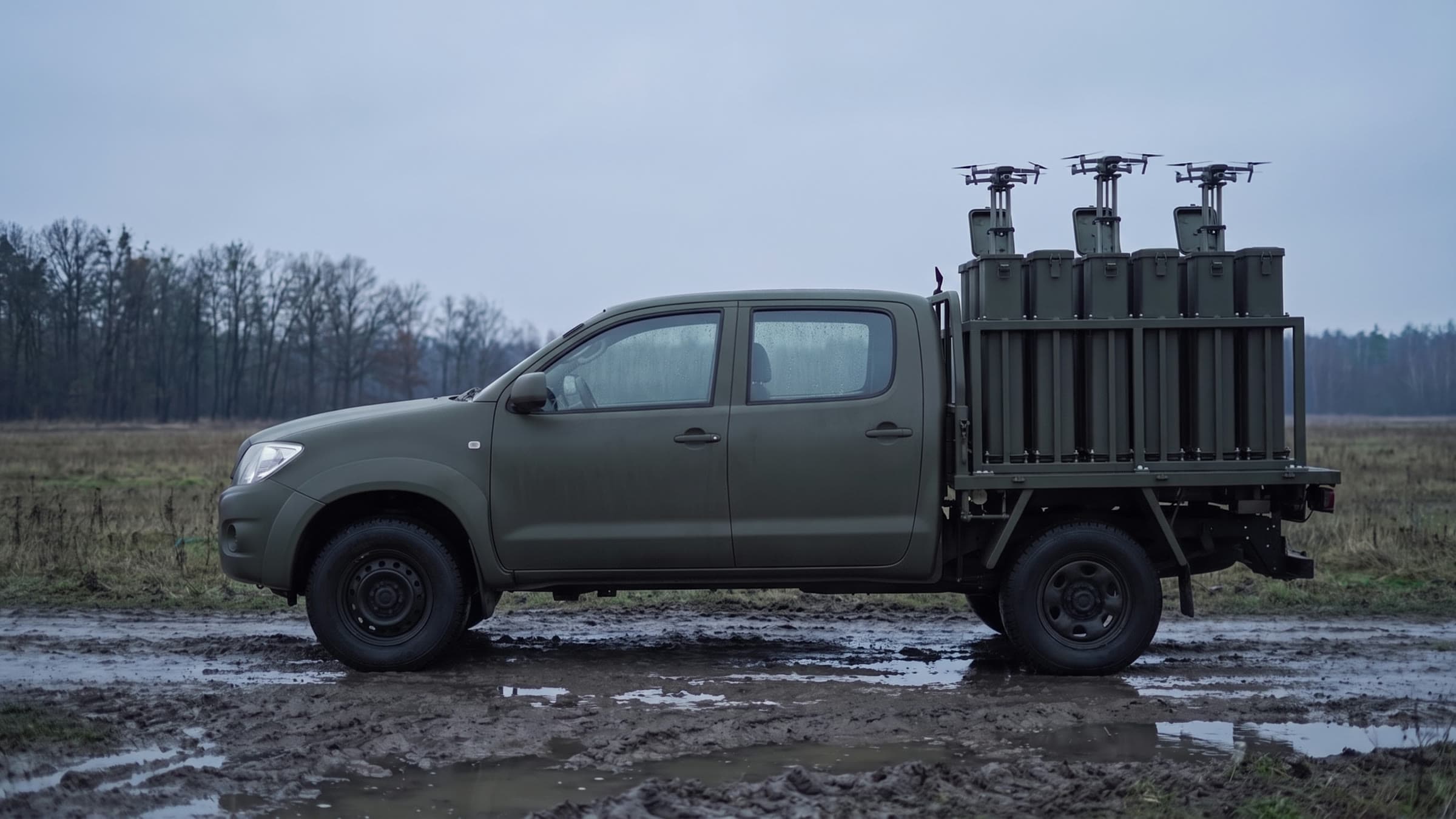
Pickup carrying a bed rack of twelve launch tubes, three columns raised with folded aircraft on top

Launch platform

Pick-up carrier

The launcher travels on a pickup and deploys wherever the vehicle stops. Twelve telescopic lifts raise the aircraft above ground obstacles and release them in a set sequence, singly or as a whole group. The installation is modifiable, so the number and spacing of the positions follow the user's task.

Carrier
Pick-up vehicle
Lifts
12 telescopic
Launch
sequential, singly or as a swarm
Ingress protection
IP67
Installation
modifiable to the user
Deployment time
not published
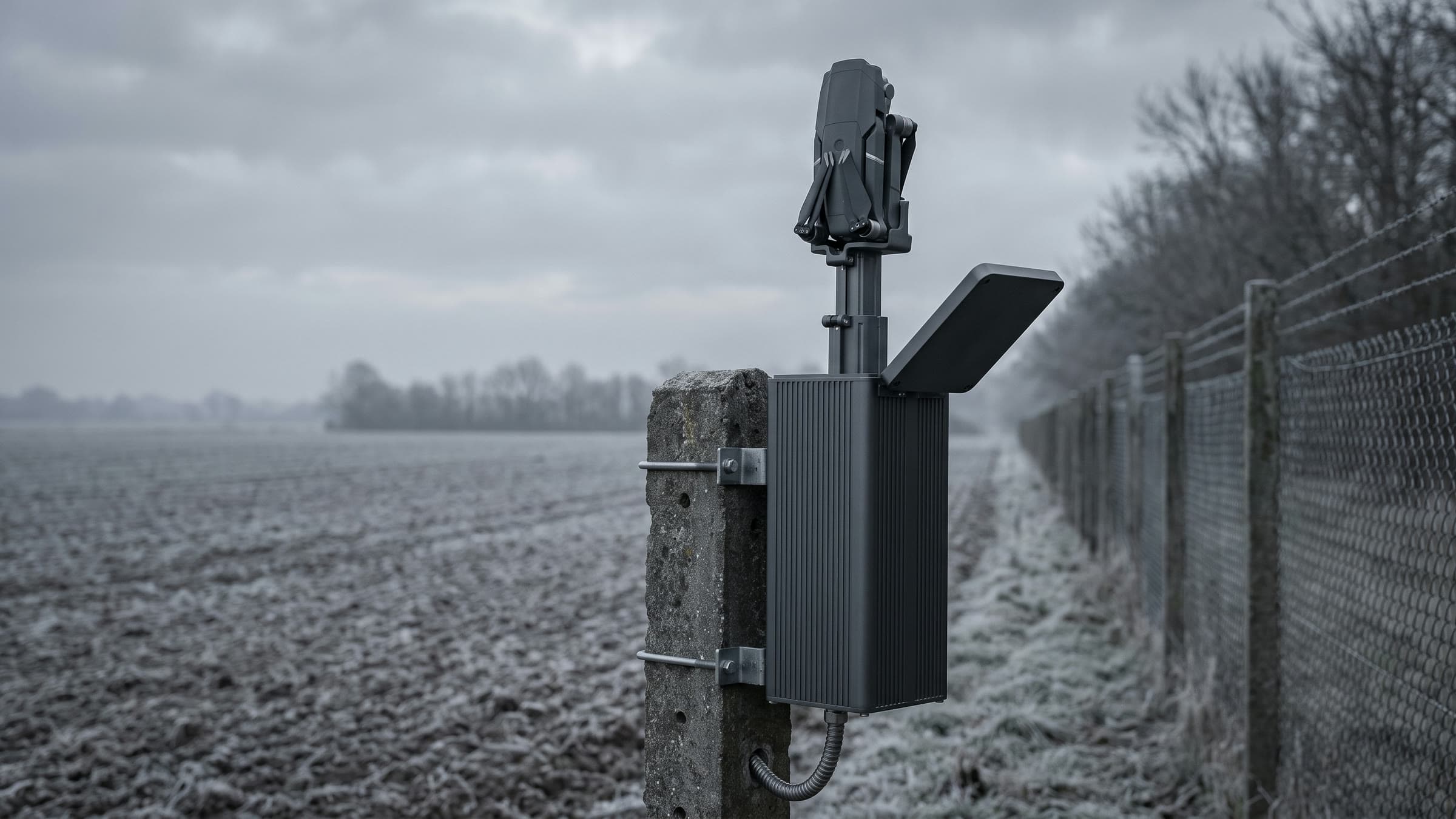
Launch canister bolted to a concrete fence post, hatch open, telescopic column raised with a folded aircraft

Telescopic lift

Working without the vehicle

The same lift works away from the vehicle: on a roof, a chimney, a fence post, with an underground installation option. Placed at several points it gives a patrol an aircraft already on site, without hauling equipment out on a call. It is started by command from the command centre, and between tasks it sits in sleep mode for more than a year.

Mounting
roof, chimney, post, underground
Dimensions
1070 × 195 × 250 mm
Mass
14 kg
Ingress protection
IP67 closed, IP54 open
Operating temperature
-20 to +50 °C
Activation
remote, from the command centre
Standby
sleep mode over a year